OUR SAFFRON HERITAGE
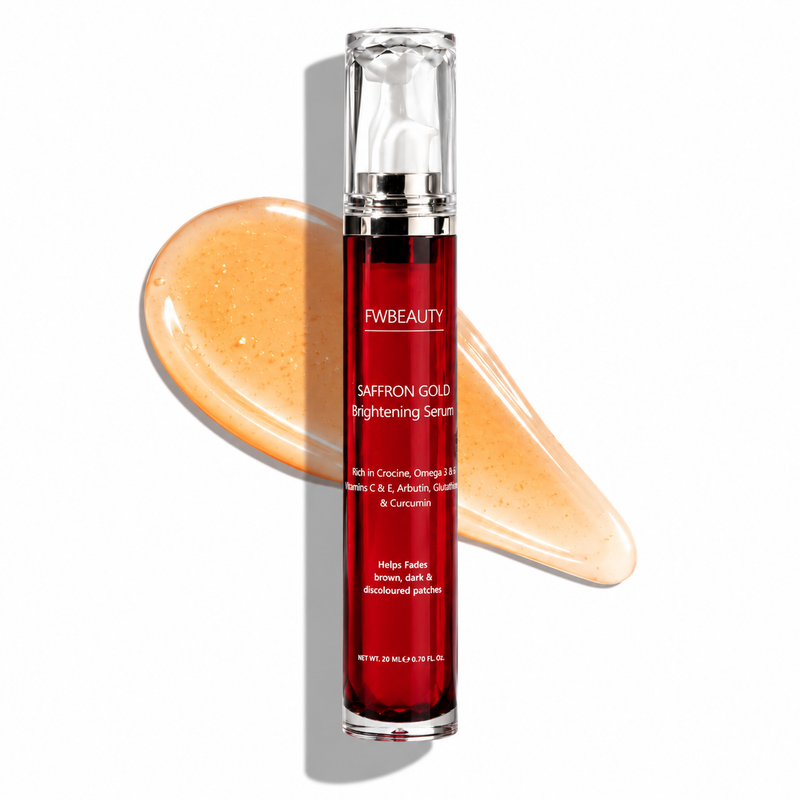
Saffron Gold Brightening Serum
An oil-based facial serum for nourishment and visible radiance. A different format from the dual-fraction approach described above.


FWBEAUTY / FORMULATION SCIENCE
Two saffron fractions.
One considered approach to formulation.
THE SBF APPROACH
Saffron BioFusion™ is FWBEAUTY’s approach to bringing aqueous and lipid saffron fractions into cosmetic formulation. Each pathway works with a different medium. Together, they inform how we build saffron-led skincare.
The Saffron BioFusion™ name is trademarked. Our formulation is Patent Pending.
EXPLORE THE TECHNOLOGY
Different saffron constituents have different solubility profiles. The extraction medium is part of the formulation decision.
01 / WATER-BASED PATHWAY
A water-based saffron extract forms the hydrophilic part of our approach. Water provides a medium for water-soluble saffron constituents.
Crocin, a saffron carotenoid pigment, is an important example of why solubility matters. Its sugar groups help explain its affinity for water.
02 / OIL-BASED PATHWAY
Saffron is infused in a lipid medium through a controlled preparation process. This is the oil-based pathway within our formulation approach.
The lipid medium is considered alongside the formula’s texture, emollients and other ingredients, giving the fraction its place in the complete product.
SAFFRON / PUBLISHED SKIN RESEARCH
Saffron brings together constituents studied for their effects on pigmentation, oxidative stress and the processes involved in skin ageing. Published research spans topical human studies, human skin-cell research and enzyme assays.
This research informs our saffron-led formulation approach. Explore the findings behind the botanical we have worked with since 2016.
Human study · saffron-extract cream
In an eight-week study of 10 volunteers, a cream containing 3% saffron extract was compared with its cream base. The authors reported a 24.04% reduction in measured skin melanin and a 13.57% reduction in redness by week eight.
Akhtar et al. · Tropical Journal of Pharmaceutical Research, 2014
Laboratory study · melanin-production pathway
Saffron extract demonstrated inhibition of tyrosinase, an enzyme involved in melanin production. This finding provides a biochemical rationale for saffron’s role in brightening research.
Human skin-cell research · crocin
A study published in the International Journal of Cosmetic Science demonstrated crocin’s antioxidant activity, protection of squalene against UVA-induced oxidation and modulation of inflammatory mediators in laboratory testing involving human skin cells.
Fagot et al. · International Journal of Cosmetic Science, 2018
Human fibroblast research · photoageing
Crocin reduced UVB-induced reactive oxygen species, increased expression of the antioxidant enzyme GPX-1 and promoted type I collagen expression in cultured human dermal fibroblasts. These findings connect saffron chemistry with oxidative stress and skin-ageing research.
Human study · wrinkles and elasticity
A cream containing saffron extract and avocado oil was used daily by 20 volunteers for 12 weeks. Researchers reported improved skin elasticity and reduced nasolabial-fold area and volume. At 12 weeks, 45% of participants showed at least one-grade improvement on the study’s aesthetic improvement scale.
Naeimifar et al. · Journal of Cosmetic Dermatology, 2020
Human skin-cell and enzyme research
Saffron extract promoted collagen and hyaluronic-acid synthesis in cultured human dermal fibroblasts and demonstrated collagenase inhibition in laboratory assays. Separately, safranal showed antioxidant activity and inhibition of collagenase, elastase and hyaluronidase—enzymes involved in the breakdown of skin’s structural components.
Xiong et al. · Journal of Herbal Medicine, 2023 · Madan & Nanda · Bioorganic Chemistry, 2018
Human study · hydration
An eight-week study of 10 volunteers evaluated a 3% saffron-extract cream alongside its base and reported significant moisturising effects on human skin.
Akhtar et al. · Pakistan Journal of Pharmaceutical Sciences, 2014
Published findings relate to the extracts, compounds and formulations evaluated in each study. FWBEAUTY’s finished-formula results are presented separately below.
FROM BOTANICAL TO FORMULA
A distinctive ingredient is only the beginning. Preparation and the formulation around it determine how it becomes usable skincare.
Work with saffron in water-based and lipid-based media, using the preparation pathway appropriate to each fraction.
Consider the fractions alongside the formula’s other actives, emollients and hydrators. Texture and compatibility are part of the design.
Assess the finished skincare product. Ingredient research, extraction rationale and finished-product results answer different questions.
BEHIND THE FORMULATION
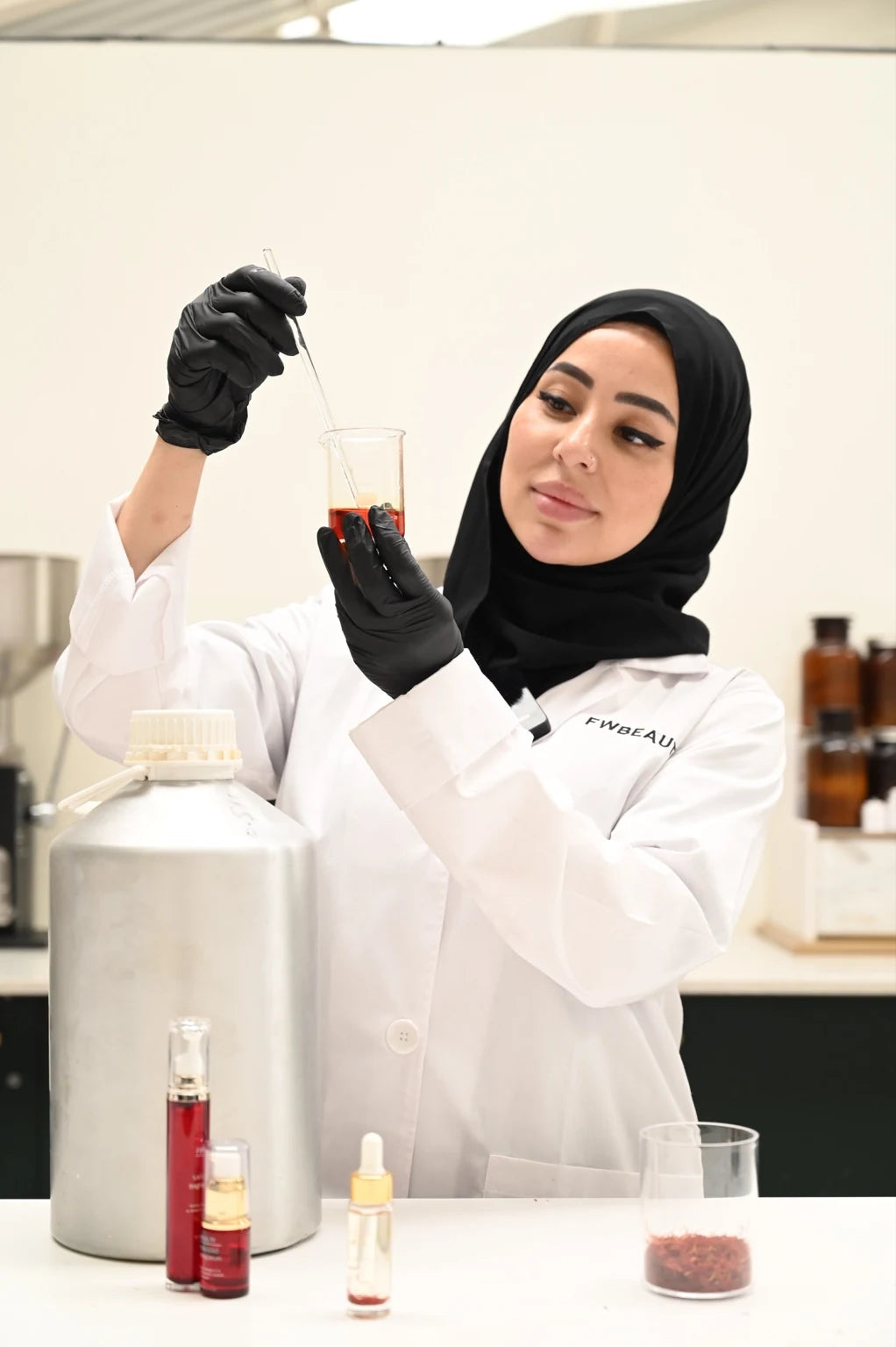
FWBEAUTY was founded in 2016. For co-founder and Cosmetic Scientist Fatiha Rouf, saffron connects her Bangladeshi roots with her work in skincare formulation.
Saffron BioFusion™ brings that focus into a two-fraction approach. The aim is considered formulation: choosing how saffron is prepared, how it fits with other ingredients, and how the finished product is evaluated.
Our work centres on skincare for uneven-looking tone, hydration and skin comfort.
EVIDENCE AT PRODUCT LEVEL
Formulation is evaluated in the finished product. Instrumental measurements help us understand changes in skin hydration and other markers over a defined period.
Youth Capsule’s published 28-day study provides one example of this product-level approach.
YOUTH CAPSULE / PUBLISHED PRODUCT STUDY
Improvement in skin hydration
Reduction in melanin index
Youth Capsule’s published instrumental efficacy study: 30 adult volunteers, twice-daily use for 28 days. Individual results vary. These figures describe the finished product, not the isolated saffron fractions.
THE FORMULATION STORY, IN SKINCARE
Explore the oil-based saffron care that helped shape FWBEAUTY, and the advanced brightening cream featuring our Saffron BioFusion™ approach.
OUR SAFFRON HERITAGE
An oil-based facial serum for nourishment and visible radiance. A different format from the dual-fraction approach described above.
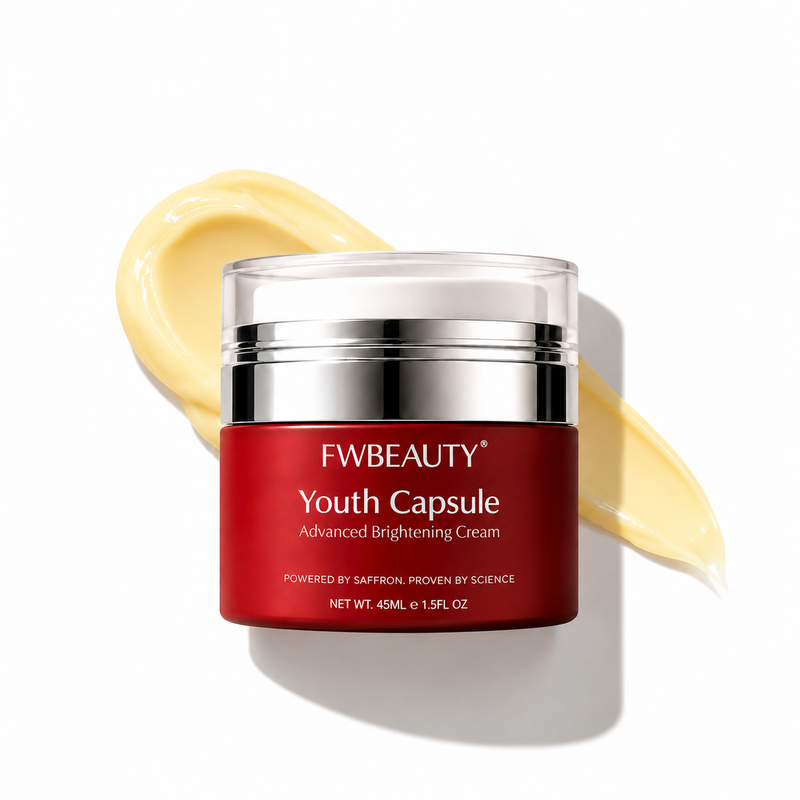
SAFFRON BIOFUSION™ / ADVANCED BRIGHTENING
Saffron-led formulation with niacinamide, tranexamic acid and moisturising support for uneven-looking tone and skin comfort.
A CLOSER LOOK
It describes the use of aqueous and lipid saffron fractions within our formulation approach. The two fractions are prepared in different media.
The formulation is Patent Pending. This means a patent application has been filed; it does not mean a patent has been granted. The Saffron BioFusion™ name is trademarked.
No. Product formats differ. An oil-based saffron serum is not automatically a dual-fraction formula. Refer to the individual product description for the approach used.
No. Chemistry explains the ingredient and helps guide formulation. Product performance depends on the complete formula and needs appropriate finished-product evidence.
Published research: Skin pigmentation, 2014 · Wrinkles and elasticity, 2020 · Skin resilience, 2023 · Crocin antioxidant research, 2018 · Crocin photoageing research, 2018 · Safranal enzyme research, 2018 · Hydration, 2014. Crocin structure: PubChem.
Saffron BioFusion™ is a trademarked name. Patent Pending refers to a patent application, not a granted patent or proof of efficacy. Botanical research does not establish the performance of a finished cosmetic product.
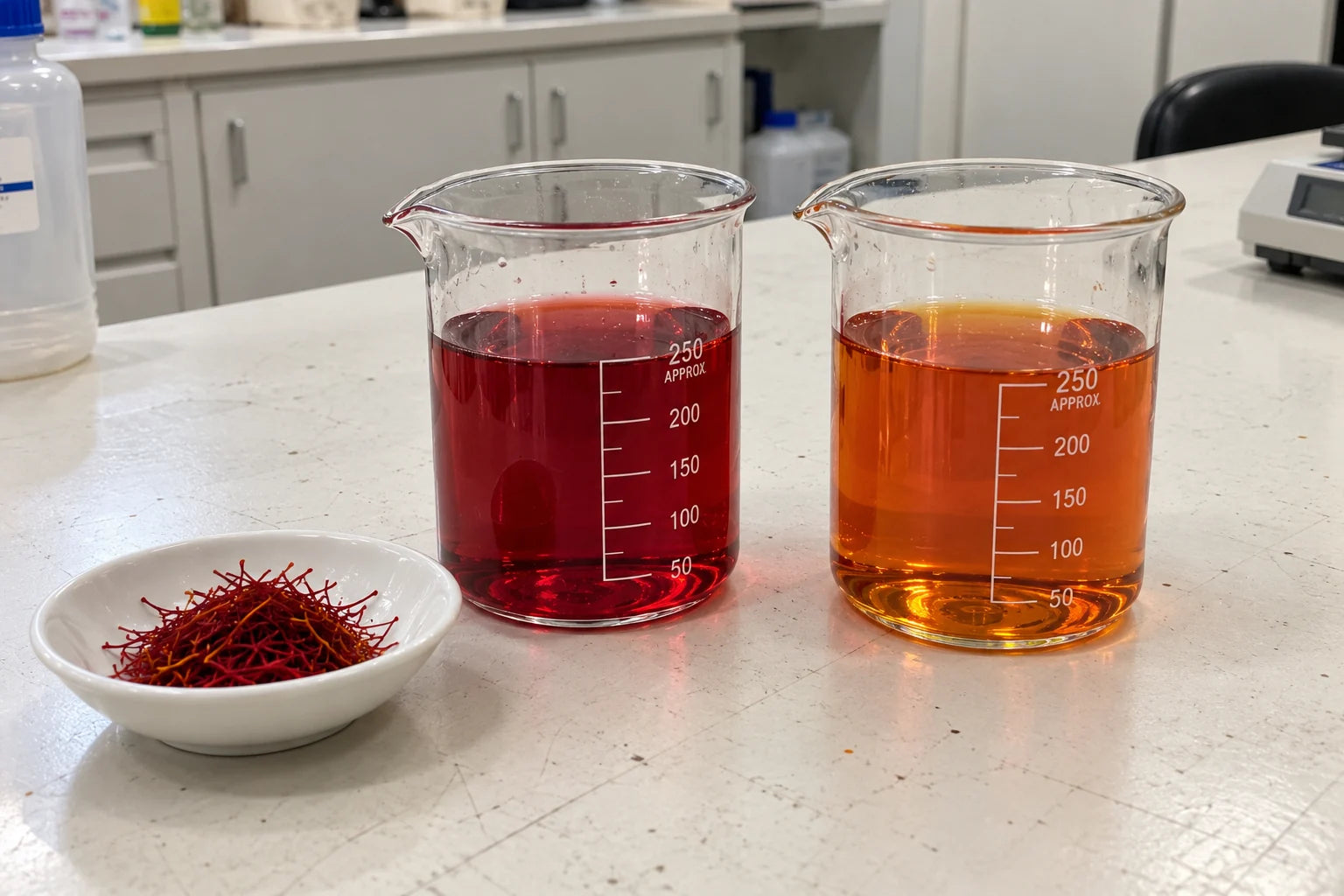
Fluid and extract visuals are AI-generated editorial imagery. The founder photograph shows Fatiha in the FWBEAUTY production lab. Colours distinguish extraction pathways; they are not analytical measurements or literal molecular colours. The crocin structure is sourced from PubChem.